

Our President, Chris van den Berg, recently joined CBC Radio to discuss how decades of automotive manufacturing experience are helping us expand into medical-device manufacturing and why we continue to invest in our people, our capabilities and our Lindsay, Ontario facility.
What does 50 years of manufacturing for some of the world’s most demanding automotive customers teach us about making medical devices?
Quite a lot, as it turns out.
For decades, we’ve built our reputation in automotive through engineering, tooling, injection molding, assembly and the disciplined execution required to support demanding, multi-year manufacturing programs. Today, we remain firmly committed to automotive. But we also see an opportunity to take the manufacturing expertise we’ve developed in that industry and apply it to another market where precision, quality and consistency are equally important: medical devices.
Our president Chris van den Berg recently joined CBC Radio’s Ontario Morning to talk about why we’re making that move, the investment behind it and what this next stage of growth means for Armada.
Automotive built the foundation
Automotive manufacturing has always demanded more than the ability to make a good part. Our customers expect processes that deliver the same result consistently over thousands – or millions – of components. Materials must be controlled and traceable. Operators must be properly trained. Inspections are ongoing. Processes need to be documented. Quality systems have to work every day, not simply when an audit is approaching. And when our finished components reach an automotive assembly line, there is very little tolerance for inconsistency.
As Chris explained during his CBC interview, many of those same disciplines are fundamental to medical-device manufacturing.
“In the manufacturing of automotive parts, there are a lot of strict standards,” Chris said, pointing to material control, operator training, ongoing inspection and recordkeeping.
Medical manufacturing requires many of those same disciplines. The major additional consideration is the manufacturing environment itself.
Cleanliness requirements are significantly different when producing medical products, which meant we needed to add another capability to our already established manufacturing system: clean manufacturing. In many ways, that makes our expansion into medical less of a reinvention and more of a logical extension of what our team has spent decades learning how to do.
Investing in new capabilities in Lindsay
We’re now making that extension tangible.
Supported in part through Canada’s Regional Tariff Response Initiative, we are investing in new plastic injection molding equipment, assembly equipment and clean-manufacturing capabilities at our Lindsay, Ontario facility.
The objective isn’t simply to add equipment. It’s to expand what our team can offer.
Modern molding capability, assembly experience and a controlled manufacturing environment will enable us to pursue medical-device programs while continuing to support the automotive customers and programs that remain an important part of our business.
And this isn’t capacity we’re creating solely in anticipation of future demand. Our first medical-device manufacturing program is already underway.
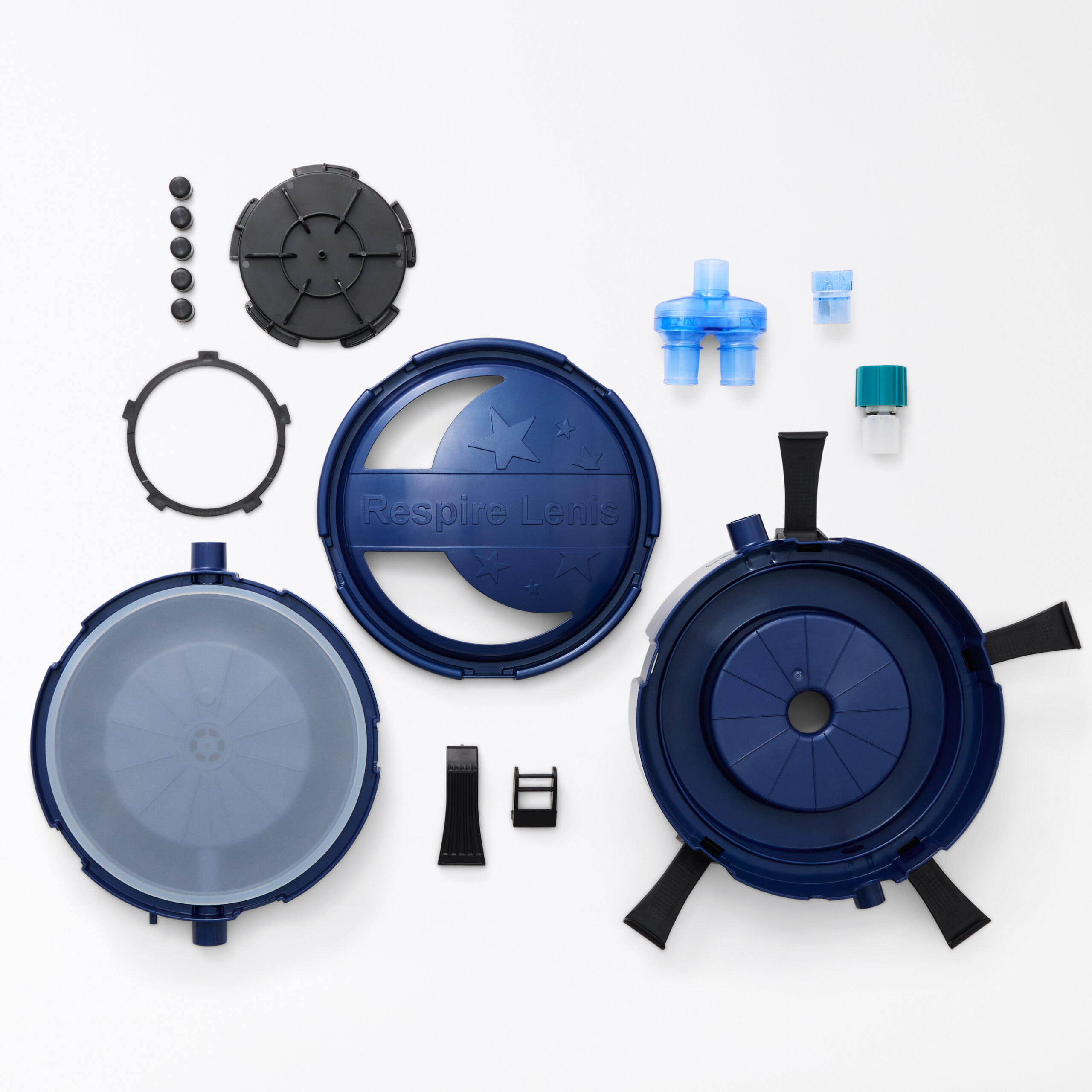
During his interview, Chris discussed our work with local medical-device company who has developed a CPAP-related product designed to operate without electricity. We’ll use our expanded capabilities to support manufacturing of the product. It’s an early example of exactly what we believe this opportunity can become: pairing innovative products with an experienced North American manufacturing team capable of helping bring them into production.
Diversifying without walking away from automotive
Our move into medical devices comes during a challenging period for the North American automotive supply chain. We’ve navigated material shortages, labor pressures, rising costs and, more recently, uncertainty surrounding tariffs and cross-border trade.
That uncertainty has had real consequences. Chris explained during the CBC interview that we had been competitive for new automotive programs but lost opportunities when customers became concerned about potential tariff exposure associated with sourcing from Canada.
Those challenges prompted an important strategic question for our team:
Where else can the capabilities we have spent decades developing create value? Medical devices emerged as one of the answers.
But diversification should not be confused with abandoning automotive. Automotive remains a core market for us and the foundation of much of the expertise that differentiates Armada today.
We continue to compete for automotive programs. We continue to invest in our automotive capabilities. And we continue to value the customer relationships and experience that have helped build our company.
Expanding into medical makes us a more diversified manufacturer, and we believe ultimately, a stronger one.
The best pivot builds on what we’re already good at
One of the most important ideas Chris shared during the interview came when he was asked what advice he would give other manufacturers facing similar uncertainty. His answer was to start with what your organization already knows how to do.
“Look at what you are good at,” Chris said. “Look at what you really can do, what your core capabilities are, and look at other industries, other markets that can use most of that again.”
Then he summarized the strategy simply:
“The more successful you will be at your pivot, the smaller the pivot is.”
That’s a useful way to understand what we’re doing at Armada. We’re not trying to become an entirely different manufacturer. We’re building on decades of expertise in engineering, tooling, injection molding, assembly, process control, quality and program execution. We’re adding the capabilities necessary to meet the requirements of another demanding industry. And we’re looking for customers who value the manufacturing discipline our team has spent decades developing.
It ultimately comes down to our people
Equipment creates capacity. Processes create consistency.
But people create capability.
That’s why one of Chris’s strongest statements during the CBC conversation wasn’t about a new molding machine or a new market. It was about our team.
“We have a very strong team of people here,” Chris said. “I would put our team up against anyone in the world.”
He went on to describe us competing for programs against manufacturers in the United States, Mexico, China, Korea and other major manufacturing markets, and winning, because of the talent inside our Lindsay facility.
That experience matters as we move into medical manufacturing. We’re bringing more than equipment into this market. We’re bringing people who understand what it means to launch demanding programs, solve manufacturing problems, control complex processes and deliver consistently for sophisticated customers.
Building our next chapter
There is a lot changing in North American manufacturing. Supply chains are being reconsidered. Trade relationships are evolving. Customers are evaluating where and how their products should be manufactured. And manufacturers themselves are looking for ways to become more resilient without losing sight of the capabilities that made them successful.
At Armada, we see opportunity in that change. We’re continuing to serve automotive. We’re investing in our Lindsay facility. We’re expanding our capabilities. We’re entering medical-device manufacturing. And we’re putting decades of hard-earned manufacturing expertise to work for a broader group of customers.
The industries may be different. The fundamentals of great manufacturing aren’t.
Listen to our President, Chris van den Berg’s CBC Radio interview to hear more about our investment, our expansion into medical-device manufacturing and what comes next for Armada.